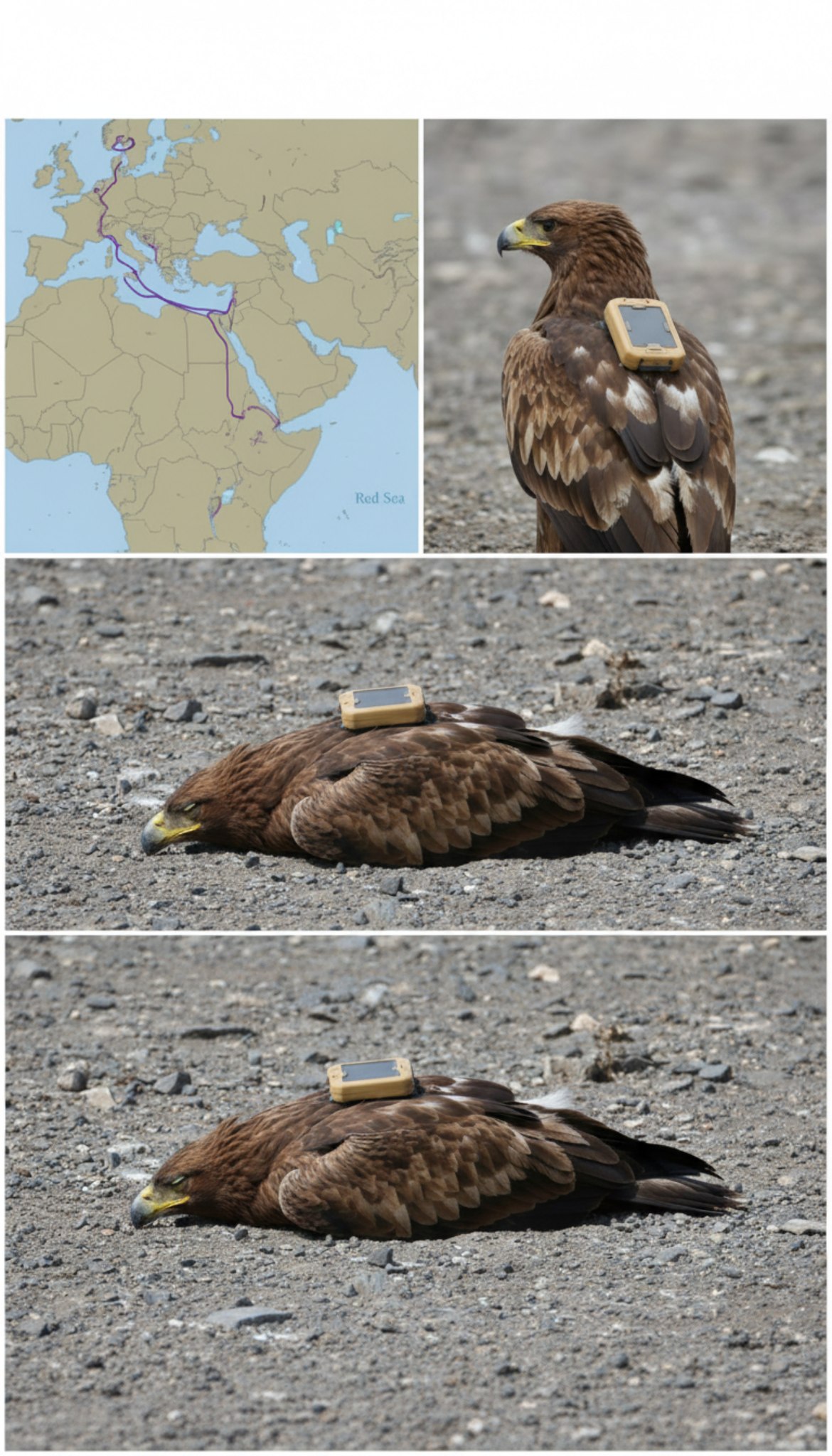
The image captures a rare moment where modern technology and wild nature intersect. A large eagle rests on rocky ground, a GPS tracking device carefully mounted on its back. The tracker is small compared to the bird’s powerful body, a reminder of how scientists rely on lightweight technology to study animals without disrupting their natural behavior.
In one frame, the eagle is alert and upright, its sharp eyes scanning the surroundings. The bird’s posture reflects strength and awareness, traits that have helped eagles survive for thousands of years. The GPS device sits securely between its wings, silently collecting data that will later be transformed into migration maps and scientific insight.
Another part of the image shows the eagle lying flat against the ground, appearing to rest. This moment highlights something researchers don’t often see—what these birds do when they are not flying vast distances. Migration isn’t constant motion; it includes pauses, recovery, and adaptation to harsh environments.
Alongside the photos, a map traces the eagle’s migration route across continents and bodies of water. The path reveals an unexpected journey, stretching far beyond what scientists once believed possible for a bird of this species. These routes challenge long-held assumptions about how far, how fast, and where eagles can travel.
The contrast between the simple tracker and the vast landscape it records is striking. A small device captures movements across thousands of miles, yet it cannot fully explain the instincts guiding the bird. The image quietly shows that data can reveal patterns, but not always the reasons behind them.
Together, these visuals tell a story of curiosity and humility in science. Even with advanced tools, nature continues to surprise researchers. The eagle is not just a subject of study—it’s a reminder that the natural world still holds mysteries worth respecting and exploring.